
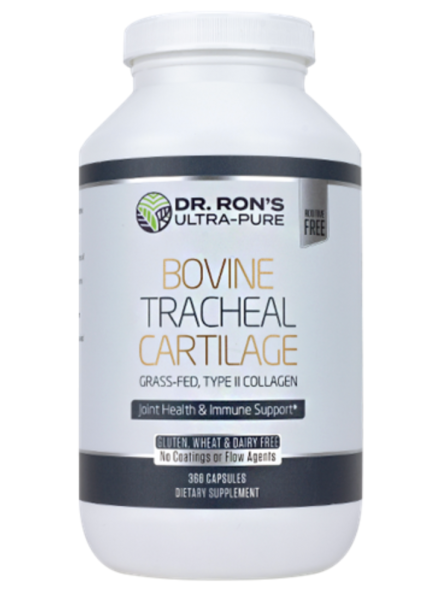
Bovine Tracheal Cartilage, 360 Capsules
This 2018 study states: It appears that BC [bovine cartilage] induces tumor cell death through apoptosis and this mechanism of action is the same across different cell lines and species. Additionally, BC appeared to be non-immunogenic.
This study states: Oral and subcutaneous administration of specific preparations of bovine tracheal cartilage rings (Catrix), a nontoxic agent, has resulted in a high response rate in 31 cases of a variety of clinical malignancies (response rate 90%, 61% complete). The demonstrated responders include present therapeutic disasters such as glioblastoma multiforme and cancers of the pancreas and lung. Other types which were treated with success included cancers of the ovary, rectum, prostate, cervix, thyroid, and an inoperable squamous cancer of the nose. These responses were observed when full dose therapy was given over prolonged courses of treatment (years).
This study states: Catrix-S is an acidic mucopolysaccharide complex derived from bovine tracheal cartilage. This material was administered by weekly subcutaneous injection (5.0-7.5 g/week) to nine patients with progressive metastatic malignancy. One complete response was seen in a patient with metastatic renal cell carcinoma to the lungs. Eight patients had progression of their disease. No undue toxicity and no consistent immunologic alteration were noted.
This study states: The antitumor efficacy of Catrix has been evaluated in the human tumor stem cell assay system using three human tumor cell lines and fresh biopsy specimens from 22 patients with malignant tumors. In vitro efficacy has been demonstrated with high dose continuous exposure Catrix, particularly against the 8226 human myeloma cell line as well as ovarian, pancreatic, colon, testicular, and sarcoma biopsy specimens.[1]
[1] https://cancerireland.ie/cancer-treatment-options/bovine-cartilege/
In the 1950s. John Prudden, MD found that BTC can have a powerful effect on diseases as deadly as glioblastoma, pancreatic cancer, and metastatic lung cancer, and as intractable as scleroderma, psoriasis, rheumatoid arthritis, and ulcerative colitis. It often reversed psoriasis, cancer and other diseases not appearing to be cartilage related. Broth made from bones, cartilage and collagen-rich tissues has a long history of safe and effective usage. BTC concentrates the critical nutrients found in broth.
Dr. Prudden also found that adults could rebuild cartilage, and he published in major medical journals. Joint problems are not inevitable, and the body can regenerate young healthy cartilage. The nutrients to accomplish this are provided in cartilage – glycine, proline, glutamine, proteoglycans, and other nutrients. The larger cartilage molecules may not be absorbed intact, but the components certainly are.
Dr. Prudden published a major article on BTC and osteoarthritis in the summer 1974 issue of Seminars in Arthritis and Rheumatism. Many people desperate over their pain and disability received significant help. In a subsequent trial with over 700 people, 85 percent reported excellent or good results. Other researchers have confirmed his findings in subsequent long-term studies.
In the early 1950s, Dr. Prudden investigated the wound healing effects of BTC. All told, he published nineteen studies in major medical journals, proving cartilage sped wound healing. Cartilage-treated wounds looked better cosmetically – smoother, flatter, more natural – than wounds treated without it. At the same time, cartilage-treated wounds were stronger, more flexible, and less likely to rupture. Dr. Prudden’s work was lauded in Sabiston’s Textbook of Surgery, where the author wrote, “After decades of experimentation, only one substance [BTC] has been shown to affect healing unequivocally.” In 1965, an editorial in the Journal of the American Medical Association recognized Dr. Prudden’s work, concluding, “The value of these observations is appreciated if we remember that most of the correctable morbidity and mortality of surgery is due to failures of wound healing.” In subsequent years, BTC has been largely ignored as highly profitable and largely ineffective pharmaceutical solutions for wound healing have been pushed to the forefront.
Dr. Prudden called BTC a “potent normalizer,” meaning that it responds to any aberrancy from normal, “because cartilage comes from the fetal mesenchyme.” This enables BTC to direct the development of various types of tissue in the human body. As a “true biological response modifier,” BTC increases the ability of white blood cells to destroy bacteria and viruses. Thus, its potency in treating infectious diseases, via activation of white blood cells known as macrophages, as well as nearly every type of white blood cell needed to mount a strong defense against microbial diseases, including ear infections, urinary tract infections, bronchitis, and other infectious diseases. Patients with shingles or mononucleosis often made rapid improvements when ingesting BTC.
In 1985, Dr. Prudden published “The Treatment of Human Cancer with Agents Prepared from Bovine Cartilage” in the December issue of the Journal of Biological Response Modifiers. The article documents an eleven-year study begun in 1972 and tracks the progress of 31 morbidly ill, “beyond hope” patients for whom standard therapy had failed.
Prudden found that BTC was completely safe, with no significant side effects. He emphasized that cartilage is not an instant miracle cure; a clear response might not be observed for four months, and some cancers, particularly those of the blood such as leukemia, did not respond. Cancer might worsen for a time before the action of the cartilage kicks in. But once remission is achieved, he said, patients should continue a maintenance dose for life. Think of this therapy not as a cure but rather as a control.
In his summary, Prudden wrote that BTC had a “major inhibitory effect upon a wide spectrum of cancers.” Eleven of the thirty-one patients had a “complete response” with probable cure. Most of the rest improved, with partial responses. Only two failed to respond at all. All had been evaluated as “hopeless” by doctors other than Prudden prior to the treatment with BTC. Many had failed to take maintenance doses after initial success, and subsequently relapsed.
These results and more are described in Dr. Prudden’s 1993 article, Summary of Bovine Tracheal Cartilage Research Program. Here are some of the most impressive individual results Prudden wrote about:
The disappearance of a large rectal carcinoma in a 54-year-old man, with demonstrated progressive normalization in the microscopic appearance of the cancer cells in sequential biopsies obtained during treatment.
Remission of a prostatic cancer, metastatic to bones, with complete normalization of all blood values. At the time Prudden published, the man was well 19 years after beginning therapy with BTC and was 91 years old.
An 18-year remission of a carcinoma of the pancreas with nodal involvement in a 69-year-old woman.
Dr. Prudden’s subsequent studies included long-term follow up on all of the 31 pilot cases and data on 140 other cases, including a number of cancers of the brain, lung, pharynx, and ovary – cases that are generally considered incurable. He reported in 1997 that the patients were “doing considerably better than anyone else would have anticipated and the results are even more impressive than the original thirty-one.”
Write Your Own Review
Product Reviews
No reviews available for this product.
