
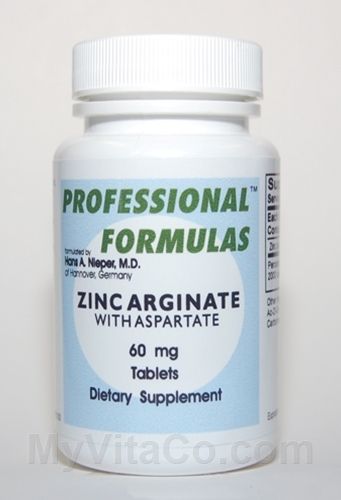
Zinc Arginate w/ Aspartate 11.3 mg 200 tablets by Dr. Hans Nieper
Zinc Arginate w/ aspartate is one of Dr. Hans Nieper’s formulas that supports the following systems:
1. Epithelial (skin) System
2. Hormonal System
3. Immune System
4. Sensory System
Zinc arginate is a mineral transporter where zinc is bound to the amino acid arginine. Along with calcium and magnesium arginates zinc arginate is helpful in stabilizing blood glucose levels. Insulin synthesis in the pancreas is enhanced by actively transported zinc. The transport of glucose across membranes is required for cell survival. Since, glucose molecules do not diffuse rapidly through cell membranes, specific transporters are required. Insulin is the best-known glucose transport facilitator. Arginates are another type of natural glucose transporter. Dr. Nieper discovered that arginates are molecular glucose receptors that can self-assemble. Natural transporters may prove supportive for patients with defects in glucose utilization.
inc Arginate w/ aspartate is one of Dr. Hans Nieper’s formulas that supports the following systems:
1. Epithelial (skin) System
2. Hormonal System
3. Immune System
4. Sensory System
"Zinc is involved in numerous aspects of cellular metabolism. It is required for the catalytic activity of approximately 100 enzymes and it plays a role in immune function, protein synthesis, wound healing, DNA synthesis, and cell division. Zinc also supports normal growth and development during pregnancy, childhood, and adolescence and is required for proper sense of taste and smell. A daily intake of zinc is required to maintain a steady state because the body has no specialized zinc storage system." (source:US National Institue of Health - Office of Dietary Supplements)
Arginine is one of the most common natural amino acids physiologically active in the L-form.
Aspartate is "one of the non-essential amino acids commonly occurring in the L-form. It is found in animals and plants, especially in sugar cane and sugar beets. It may be a neurotransmitter." (source:source: US National Library of Medicine - 2009 Medical Subject Headings (MeSH) )
Zinc is known to play a central role in the immune system, and zinc-deficient persons experience increased susceptibility to a variety of pathogens. The immunologic mechanisms whereby zinc modulates increased susceptibility to infection have been studied for several decades. It is clear that zinc affects multiple aspects of the immune system, from the barrier of the skin to gene regulation within lymphocytes. Zinc is crucial for normal development and function of cells mediating nonspecific immunity such as neutrophils and natural killer cells. Zinc deficiency also affects development of acquired immunity by preventing both the outgrowth and certain functions of T lymphocytes such as activation, Th1 cytokine production, and B lymphocyte help. Likewise, B lymphocyte development and antibody production, particularly immunoglobulin G, is compromised. The macrophage, a pivotal cell in many immunologic functions, is adversely affected by zinc deficiency, which can dysregulate intracellular killing, cytokine production, and phagocytosis. The effects of zinc on these key immunologic mediators is rooted in the myriad roles for zinc in basic cellular functions such as DNA replication, RNA transcription, cell division, and cell activation. Apoptosis is potentiated by zinc deficiency. Zinc also functions as an antioxidant and can stabilize membranes. This review explores these aspects of zinc biology of the immune system and attempts to provide a biological basis for the altered host resistance to infections observed during zinc deficiency and supplementation.(source: https://pubmed.ncbi.nlm.nih.gov/9701160/)
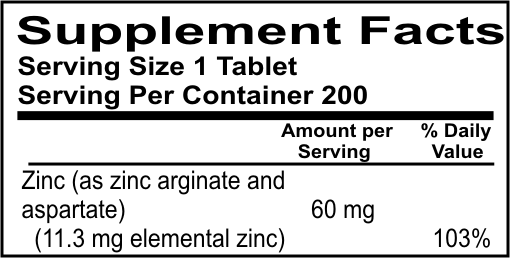
Zinc (as zinc arginate-aspartate) 60 mg - 11.3 mg of elemental zinc per tablet.
Zinc Arginate w/ aspartate
Product Reviews
No reviews available for this product.
