
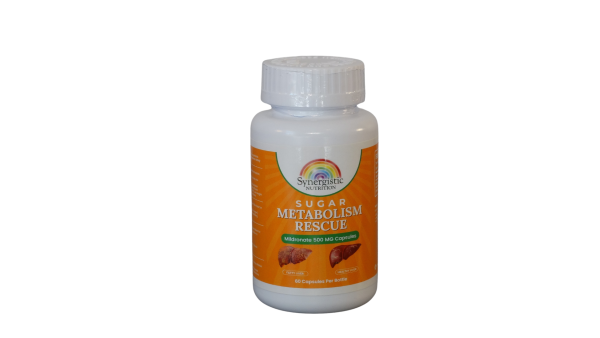
Sugar Metabolism Rescue - Mildronate 500 mg capsules - 60 capsules per bottle
Mildronate is the trade name for meldonium (3-(2,2,2-trimethylhydrazinium) propionate). It’s a synthetic compound developed in Latvia in the 1970s and became widely used in Eastern Europe.
Mechanism of Action
- Mildronate inhibits the enzyme γ-butyrobetaine hydroxylase, which normally helps synthesize carnitine.
- Less carnitine → less transport of long-chain fatty acids into mitochondria.
- This shifts cell metabolism away from fatty acid oxidation toward glucose oxidation, which is more oxygen-efficient.
- The result: tissues (especially the heart and brain) use oxygen more efficiently under stress or low-oxygen conditions.
Main Effects
- Improves energy metabolism in ischemic tissues (like heart or brain after reduced blood flow).
- Protects cells from damage during hypoxia (low oxygen).
- Has anti-ischemic, anti-oxidative, and mild vasodilating properties.
Clinical Uses (outside the U.S. & EU)
In Latvia, Russia, and some other countries, it’s prescribed for:
- Angina pectoris (chest pain from reduced blood flow to the heart)
- Heart failure
- Cardiomyopathy
- Cerebral circulation disorders (stroke recovery, chronic brain ischemia)
- Physical and mental fatigue
Sports & Controversy
- Because it increases endurance and recovery, many athletes used it.
- In 2016, the World Anti-Doping Agency (WADA) banned meldonium, adding it to the list of prohibited substances.
Safety & Side Effects
Generally considered well-tolerated, but possible side effects:
- Mild GI upset
- Allergic reactions
- Insomnia or agitation in some cases
Mildronate is the trade name for meldonium (3-(2,2,2-trimethylhydrazinium) propionate). It’s a synthetic compound developed in Latvia in the 1970s and became widely used in Eastern Europe.
Mechanism of Action
- Mildronate inhibits the enzyme γ-butyrobetaine hydroxylase, which normally helps synthesize carnitine.
- Less carnitine → less transport of long-chain fatty acids into mitochondria.
- This shifts cell metabolism away from fatty acid oxidation toward glucose oxidation, which is more oxygen-efficient.
- The result: tissues (especially the heart and brain) use oxygen more efficiently under stress or low-oxygen conditions.
Main Effects
- Improves energy metabolism in ischemic tissues (like heart or brain after reduced blood flow).
- Protects cells from damage during hypoxia (low oxygen).
- Has anti-ischemic, anti-oxidative, and mild vasodilating properties.
Clinical Uses (outside the U.S. & EU)
In Latvia, Russia, and some other countries, it’s prescribed for:
- Angina pectoris (chest pain from reduced blood flow to the heart)
- Heart failure
- Cardiomyopathy
- Cerebral circulation disorders (stroke recovery, chronic brain ischemia)
- Physical and mental fatigue
Sports & Controversy
- Because it increases endurance and recovery, many athletes used it.
- In 2016, the World Anti-Doping Agency (WADA) banned meldonium, adding it to the list of prohibited substances.
Safety & Side Effects
Generally considered well-tolerated, but possible side effects:
- Mild GI upset
- Allergic reactions
- Insomnia or agitation in some cases
Mildronate is the trade name for meldonium (3-(2,2,2-trimethylhydrazinium) propionate). It’s a synthetic compound developed in Latvia in the 1970s and became widely used in Eastern Europe.
500 mg per capsules
other ingredients: 7% rice powder
1 capsule 1-2x per day, or as directed by your health care professional.
Product Reviews
No reviews available for this product.
