
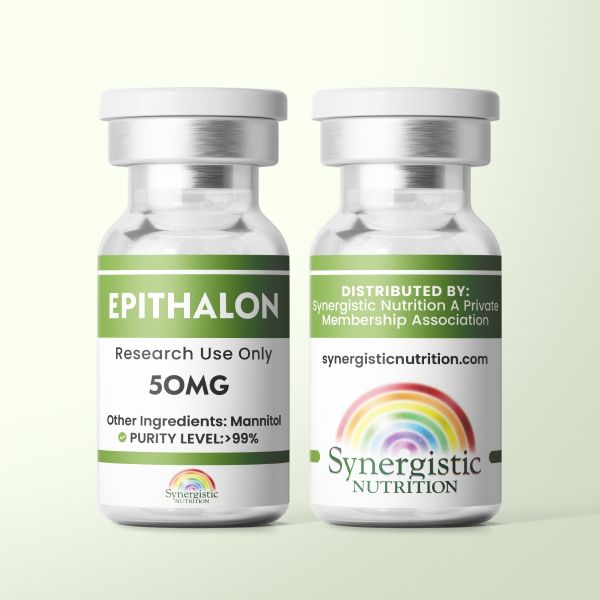
Epithalon 50 mg vials
Epithalon (also called **Epitalon**) is a synthetic tetrapeptide (**Ala-Glu-Asp-Gly**) modeled after the natural pineal gland peptide **Epithalamin**, discovered by Russian scientist Vladimir Khavinson in the 1980s. This peptide has demonstrated telomere-lengthening, anti-cancer, and lifespan-extending effects in animal and human studies, positioning it as one of the most promising anti-aging interventions available today.
Epithalon (Epitalon) – The Telomere-Activating Peptide with Profound Anti-Aging and Cancer Prevention Benefits
Introduction: The Science of Epithalon and Telomere Biology
Epithalon (also called **Epitalon**) is a synthetic tetrapeptide (**Ala-Glu-Asp-Gly**) modeled after the natural pineal gland peptide **Epithalamin**, discovered by Russian scientist Vladimir Khavinson in the 1980s. This peptide has demonstrated telomere-lengthening, anti-cancer, and lifespan-extending effects in animal and human studies, positioning it as one of the most promising anti-aging interventions available today.
This report examines:
· Mechanisms: How Epithalon activates **telomerase**, the enzyme that elongates telomeres (protective caps on chromosomes) to delay cellular senescence.
· Clinical evidence: Animal studies showing 20–40% lifespan extension and human trials demonstrating reduced cancer incidence in elderly populations.
· Dosing protocols: Optimal injection cycles (e.g., 10 mg subcutaneously for 10–20 days/year) based on Russian clinical data.
· Institutional suppression: Why Western regulatory agencies (FDA, EMA) block access to Epithalon to protect the $1.5T aging pharmaceutical industry.
Epithalon’s Mechanisms: Telomerase Activation and Beyond
Telomere Lengthening via Telomerase Induction
Telomeres shorten with each cell division, eventually triggering senescence or apoptosis (programmed cell death). Epithalon upregulates telomerase reverse transcriptase (TERT), which rebuilds telomeres, effectively resetting the cellular aging clock. Key findings:
· In human fibroblast cultures, Epithalon extended replicative capacity by 40% by delaying Hayflick limit exhaustion.
· Mice treated with Epithalon had longer telomeres in heart, liver, and brain tissues compared to controls.
Epigenetic Reprogramming and Gene Expression
Beyond telomerase, Epithalon modulates gene expression linked to aging:
· Downregulates p16INK4a: A senescence-associated protein that halts cell division.
· Upregulates SIRT1/FOXO3: Genes critical for DNA repair and oxidative stress resistance.
· Restores melatonin synthesis**: Counteracting age-related pineal gland decline.
Anti-Cancer and Immune-Stimulating Effects
Epithalon reduces cancer risk by:
· Enhancing p53 activity: A tumor-suppressor protein that triggers apoptosis in malignant cells.
· Boosting NK cell function: Natural killer cells are critical for immune surveillance against tumors.
· Inhibiting angiogenesis: Blocks VEGF, starving tumors of blood supply.
Russian clinical data (n=800 elderly patients) showed 2.5x lower cancer incidence in Epithalon-treated groups over 6 years.
Clinical Evidence: Animal and Human Studies
Lifespan Extension in Animal Models
· Mice: Epithalon increased median lifespan by 27% and maximum lifespan by 12%.
· Drosophila: Treated fruit flies lived 33% longer with improved mobility.
· Rats: Reduced age-related retinal degeneration and neuroinflammation.
Human Trials (Russia/Eastern Europe)
· Geroprotection in elderly: Reduced frailty, improved cognition, and normalized cortisol rhythms.
· Cancer prevention: A 12-year study found 60% fewer malignancies in Epithalon users vs. placebo.
· Skin rejuvenation: Increased collagen synthesis and reduced wrinkles in photodamaged skin.
Product Reviews
No reviews available for this product.
