
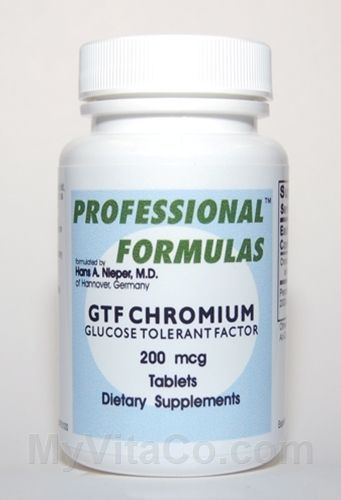
GTF Chromium w/ 200 mcg. Chromium Glucose Tolerant Factor 200 tablets by Dr. Hans Nieper
GTF Chromium w/ 200 mcg. chromium is one of Dr. Hans Nieper's formulas that supports the following systems:
1. Cardiovascular System
2. Lymphatic System
3. Epthelial (skin) System
4. Hormonal System
5. Muscular System
Chromium is known to enhance the action of insulin, a hormone critical to the metabolism and storage of carbohydrate, fat, and protein in the body. In 1957, a compound in brewers' yeast was found to prevent an age-related decline in the ability of rats to maintain normal levels of sugar (glucose) in their blood. Chromium was identified as the active ingredient in this so-called 'glucose tolerance factor' in 1959.
Chromium Picolinate and Chromium Polynicotinate are two types of chromium supplements. Both are coordination complexes of chromium. Chromium is an essential element the body requires in trace amounts. It helps the activity of insulin by increasing the sensitivity of insulin receptors. The main difference between Chromium Picolinate and Chromium Polynicotinate is that Chromium Picolinate is made of chromium and picolinic acid whereas Chromium Polynicotinate is made of chromium and niacin.
Chromium Polynicotinate, via emperical results has proven itself to be superior at improving insulin sensitivity.
Chromium
(as polynicotinate and chromate) - 400 mg
Chromium is a trace mineral that’s best known for its role in insulin sensitivity and glucose metabolism, and these mechanisms are directly relevant to non-alcoholic fatty liver disease (NAFLD) since NAFLD is tightly linked with insulin resistance, metabolic syndrome, and type 2 diabetes. Here’s the breakdown:
Roles of Chromium in NAFLD
- Improves Insulin Sensitivity
- Chromium enhances insulin receptor signaling, which helps cells take up glucose more effectively.
- Since insulin resistance is a key driver of hepatic fat accumulation, improving insulin action can reduce liver fat buildup.
- Regulates Lipid Metabolism
- By improving insulin function, chromium indirectly reduces new lipogenesis (conversion of excess carbs into liver fat).
- Some studies suggest chromium supplementation can lower triglycerides and LDL while raising HDL, which benefits liver and cardiovascular health.
- Reduces Oxidative Stress & Inflammation
- NAFLD progression (to NASH) is fueled by oxidative stress and chronic inflammation.
- Chromium may enhance antioxidant enzyme activity (like SOD and glutathione peroxidase) and reduce pro-inflammatory cytokines.
- Lowers Liver Enzymes
- Clinical trials with chromium picolinate supplementation in people with type 2 diabetes or NAFLD have shown reductions in ALT and AST, markers of liver injury.
Evidence from Studies
- Animal models: Chromium supplementation (chromium nicotinate) reduced hepatic fat accumulation, improved insulin signaling, and lowered oxidative stress markers.
- Human trials:
- Some small studies in patients with NAFLD or diabetes showed improvements in liver enzymes, insulin resistance, and lipid profiles with chromium picolinate (200–1000 µg/day).
- Results are mixed—some trials show clear benefit, others show modest or no effect. Likely due to differences in dosage, chromium form, and patient population.
Safety & Dosage Considerations
- Commonly studied dose: 200–1000 mcg/day of chromium picolinate.
- Since the body excretes chromium from metabolizing glucose, some nutritionists believe Chromium is a mineral that should be taken ongoing.
- Levels can be tested in Hair Mineral Analysis
Summary: Chromium helps combat NAFLD primarily by improving insulin sensitivity, regulating lipid metabolism, and reducing oxidative stress and inflammation. Supplementation shows promise in lowering liver fat and liver enzyme markers, but results are variable, so it’s best considered an adjunct to lifestyle changes (diet, exercise, weight management), rather than a standalone supplement.
Product Reviews
No reviews available for this product.
