
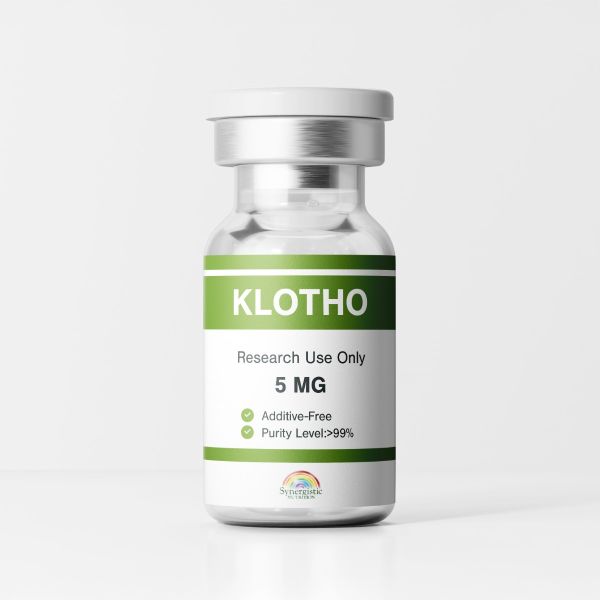
Klotho 5 mg vial - When out of stock, this takes 4-6 weeks to get.
Why It Matters
Low Klotho levels are associated with:
- Aging and shortened lifespan
- Kidney disease
- Cardiovascular disease
- Neurodegenerative diseases (Alzheimer’s, Parkinson’s)
- Diabetes and insulin resistance
Klotho (pronounced KLO-tho, named after the Greek Fate who spins the thread of life) is both a gene and a protein that plays a major role in regulating aging, metabolism, and brain and kidney function.
Here’s a clear overview
1. What Klotho Is
- The Klotho gene (KL) produces the Klotho protein, first discovered in 1997 by Dr. Makoto Kuro-o.
- Mice lacking this gene aged extremely rapidly (wrinkles, arteriosclerosis, osteoporosis, shortened lifespan), while mice with higher Klotho expression lived longer.
- This led to Klotho being called a “longevity gene.”
2. Where It’s Made
- Mainly produced in the kidneys and choroid plexus of the brain.
- Smaller amounts are made in parathyroid glands, pituitary, reproductive organs, and vascular tissue.
There are two forms:
- Membrane-bound Klotho – acts as a co-receptor for hormones.
- Soluble Klotho – released into the bloodstream and cerebrospinal fluid; acts more like a hormone itself.
3. What Klotho Does
A. Regulates Mineral and Ion Balance
- Works with FGF23 (fibroblast growth factor 23) to control phosphate and vitamin D metabolism.
- Helps the kidneys excrete excess phosphate — protecting against vascular calcification and kidney damage.
B. Promotes Longevity and Cellular Protection
- Inhibits insulin and IGF-1 signaling (pathways linked to aging and oxidative stress).
- Increases resistance to oxidative damage and inflammation.
- Enhances repair and regeneration in various tissues.
C. Supports Brain Function
- Higher Klotho levels are associated with better cognition and memory, even in people with Alzheimer’s risk genes.
- In mice, extra Klotho improves synaptic function and learning ability.
D. Protects Kidneys and Vessels
- Low Klotho levels are seen in chronic kidney disease (CKD) and are linked to worse outcomes.
- Helps protect blood vessels from calcification and stiffness.
4. Why It Matters
Low Klotho levels are associated with:
- Aging and shortened lifespan
- Kidney disease
- Cardiovascular disease
- Neurodegenerative diseases (Alzheimer’s, Parkinson’s)
- Diabetes and insulin resistance
5. Can Klotho Be Increased?
Research suggests certain factors may increase or preserve Klotho expression:
|
Category |
Possible Influences |
|
Lifestyle |
Caloric restriction, exercise, sufficient sleep |
|
Nutrients/Compounds (animal or cell data) |
Vitamin D, omega-3s, curcumin, resveratrol, astaxanthin, alpha-lipoic acid, hydrogen-rich water |
|
Medical |
ACE inhibitors, angiotensin receptor blockers (used for kidney and heart protection) |
|
Experimental |
Gene therapy delivering Klotho DNA has extended lifespan and improved cognition in mice |
However, there’s no approved Klotho supplement or therapy in humans yet — though companies are studying recombinant Klotho protein and Klotho gene therapy for kidney failure and cognitive decline.
6. Summary
|
Feature |
Description |
|
Gene name |
KL (Klotho) |
|
Main sites of production |
Kidney, brain (choroid plexus) |
|
Core function |
Regulates phosphate, vitamin D, and FGF23; protects against aging |
|
Health impact |
Higher levels = longer lifespan, better cognition, reduced inflammation |
|
Current status |
Biomarker of aging; experimental target for anti-aging and kidney therapies |
Klotho 5 mg
Other ingredients: Mannitol
For research purposes only.
Product Reviews
No reviews available for this product.
