Vitamin E - 30 capsules
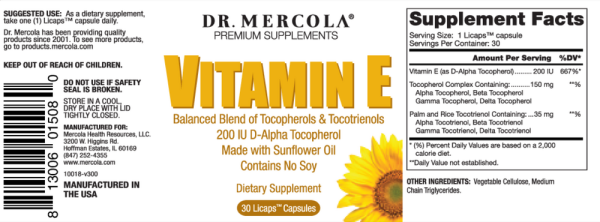
There are plenty of vitamin E supplements on the market. You can find one practically anywhere you look. But the vast majority of them use soy as their source of vitamin E. So when looking for a good alternative, Dr. Mercola wanted to not only avoid soy but also wanted to make sure whatever natural source of vitamin E was used was not genetically engineered (GE). That’s why they decided to use sunflowers for the source of vitamin E. They are an excellent natural source of vitamin E. But soy isn’t the only thing you need to be wary of. It is vital to get a balance of all eight nutrients in a vitamin E supplement you take to complement your healthy diet. You see if the vitamin E supplement only contains alpha tocopherol (synthetic or natural), there’s another major issue. If high levels of alpha tocopherol flood your system, they can potentially deplete the other tocopherols and tocotrienols from your body. Here’s how Dr. Mercola's Vitamin E supplement provides a fantastic balance of all four tocopherol and tocotrienol compounds… • Vitamin E (as d-Alpha Tocopherol) – 134 mg • Palm and Rice Tocopherol and Tocotrienol Complex – 70 mg of a mix of alpha-, beta-, gamma-, and delta- tocopherols and tocotrienols.
Serving size: 1 Capsule
Servings per container: 30
Ingredient
Quantity
Vitamin E
134 mg (120.6 IU)
Total Non Alpha Tocopherol Forms
Other Ingredients: Capsule (Hydroxypropyl Methylcellulose), Medium Chain Triglycerides.
Adults, as a dietary supplement, take one (1) capsule daily.
Vitamin E is actually sometimes called the “fertility vitamin” because of its essential role in reproduction in both men and women. Here’s a breakdown:
Vitamin E and Reproduction
In Men
-
Sperm Health:
-
Vitamin E is a powerful antioxidant that protects sperm from oxidative stress and DNA damage.
-
It stabilizes cell membranes (especially important for sperm, which are rich in polyunsaturated fatty acids and easily damaged by free radicals).
-
-
Fertility Outcomes:
-
Studies show that supplementation can improve sperm motility, count, and morphology, especially when combined with vitamin C, selenium, or CoQ10.
-
-
Testosterone Support:
-
Helps maintain testicular health and may support hormone production indirectly by reducing oxidative stress.
-
In Women
-
Egg & Ovarian Health:
-
Protects ovarian tissue and developing eggs from oxidative damage.
-
May improve endometrial health, supporting implantation.
-
-
Menstrual Cycle & Hormone Balance:
-
Plays a role in prostaglandin regulation, which can influence menstrual cramps and reproductive hormone signaling.
-
-
Pregnancy:
-
Important for placenta development, embryonic growth, and preventing miscarriage in cases linked to oxidative stress.
-
General Reproductive Benefits
-
Antioxidant Action: Protects reproductive tissues from free radicals.
-
Immune Modulation: Helps regulate immune response in the reproductive tract (important for embryo tolerance).
-
Deficiency Risks: Infertility, miscarriage, testicular degeneration, and impaired sperm/egg development have been linked to vitamin E deficiency in both humans and animal studies.
Sources
-
Natural forms: nuts (almonds, hazelnuts), seeds (sunflower, pumpkin), wheat germ oil, avocado, spinach, olive oil.
-
Supplements: Often in the form of d-alpha-tocopherol (natural) or dl-alpha-tocopherol (synthetic).
Summary:
Vitamin E supports sperm and egg health, hormone balance, and successful pregnancy outcomes by protecting reproductive cells from oxidative damage and supporting healthy tissue function. That’s why deficiency often leads to fertility problems.
Product Reviews
No reviews available for this product.
