
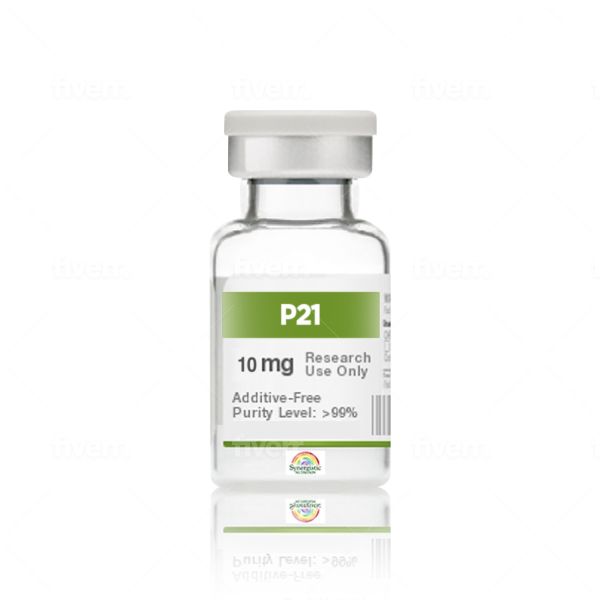
P21 (P021) 10mg/vial
Peptide P21 (also known as Peptide P021) is a nootropic and neuroregenerative peptide being researched for its potential to prevent and reverse neurodegeneration, particularly in diseases like Alzheimer’s, Parkinson’s, and age-related cognitive decline.
Peptide P21 (also known as Peptide P021) is a nootropic and neuroregenerative peptide being researched for its potential to prevent and reverse neurodegeneration, particularly in diseases like Alzheimer’s, Parkinson’s, and age-related cognitive decline.
What Is P21 Peptide?
- Synthetic peptide derived from a portion of ciliary neurotrophic factor (CNTF).
- Often combined with a lipid carrier (like adamantylated glycine) to cross the blood-brain barrier more efficiently.
- Designed to promote brain repair, plasticity, and neurogenesis.
Key Benefits (Based on Preclinical Research)
|
Potential Benefit |
Mechanism |
|
Enhances Neurogenesis |
Stimulates the growth of new neurons, especially in the hippocampus |
|
Boosts Cognitive Function |
Improves learning, memory, and focus in aged or impaired animal models |
|
Neuroprotection |
Protects neurons from beta-amyloid toxicity and oxidative stress |
|
Promotes Synaptic Plasticity |
Helps form and maintain synaptic connections, critical for memory |
|
Reduces Tau Pathology |
Inhibits hyperphosphorylated tau protein, which forms neurofibrillary tangles |
|
⚖️ Modulates BDNF & GSK3β |
Upregulates brain-derived neurotrophic factor (BDNF) and downregulates GSK3β, a kinase involved in tau pathology |
Mechanism of Action Summary
- Mimics neurotrophic factors → promotes repair and growth in brain tissue.
- Crosses the blood-brain barrier and targets regions affected by aging or neurodegeneration.
- Enhances the Wnt/β-catenin pathway, supporting cell survival and neuroplasticity.
Research Status
- Animal studies show strong promise in:
- Reversing cognitive deficits
- Reducing Alzheimer's-like pathology
- Human trials: As of now, no large-scale clinical trials have been published.
- Commonly found in experimental nootropic and longevity communities, often used off-label.
Dosing & Use (Experimental Context Only)
Not approved for medical use, for research only
- Route: Often used intranasally for brain delivery.
- Dose: Experimental doses vary; 200–500 mcg intranasally is anecdotally reported.
- Cycle: Some use it in cycles of 4–6 weeks on, followed by breaks.
Summary
|
Property |
Details |
|
Target Area |
Brain (hippocampus, cortex) |
|
Main Actions |
Neurogenesis, synaptic repair, anti-tau |
|
Use Case |
Alzheimer’s prevention, nootropic, aging brain |
|
Delivery |
Intranasal (most common), injectable (rare) |
|
Status |
Research compound |
For research purposes only.
Product Reviews
No reviews available for this product.
