



"Stephen Heuer has extensive knowledge in helping you recover from any health challenge you are facing. I have had issues with my kidneys and Stephen has been invaluable in helping my health get better. You would do yourself a favor by getting a consultation from him for whatever health challenges you are facing."
Move cursor or drag to inspect · click again to zoom out
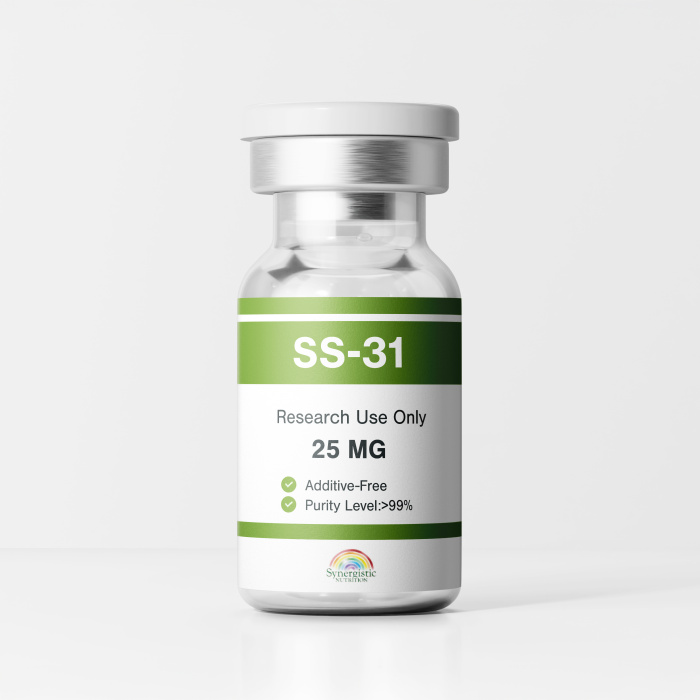
SS-31 25 mg vials
SS-31 helps improve mitochondrial function and overall production of energy via ATP synthesis. Research has shown its ability to reduce inflammatory cytokines which cause oxidative stress and inflammatory diseases such as Alzheimer’s, Parkinson’s, heart disease, diabetes, kidney disease, and more
- In Stock
- We Deliver Worldwide
Secure Checkout
The SS-31 peptide (also known as elamipretide) is a small, mitochondria-targeted peptide with significant biological and therapeutic value due to its ability to protect and restore mitochondrial function.
Here’s a concise overview of its value and key properties:
Basic Information
- Name: SS-31 (Elamipretide)
- Sequence: D-Arg-Dmt-Lys-Phe-NH₂
(Dmt = 2’,6’-dimethyltyrosine) - Molecular Weight: ~639.8 Da
- Type: Cell-permeable, mitochondria-targeting tetrapeptide
Mechanism of Action
SS-31 binds specifically to cardiolipin, a unique phospholipid in the inner mitochondrial membrane.
By doing so, it:
- Stabilizes mitochondrial membranes
- Reduces reactive oxygen species (ROS) production
- Improves ATP generation
- Prevents cytochrome c leakage (which triggers apoptosis)
Essentially, it restores mitochondrial integrity and energy output while reducing oxidative stress.
Key Benefits (Observed in Studies)
- Improved mitochondrial efficiency and bioenergetics.
- Protection against ischemia-reperfusion injury (heart, kidney, brain).
- Anti-aging and neuroprotective effects (shown in models of Alzheimer’s, Parkinson’s, and retinal degeneration).
- Enhanced muscle strength and endurance in aging models.
- Reduced inflammation and oxidative damage.
Research & Clinical Applications
- Cardiovascular disease (heart failure, ischemia)
- Mitochondrial myopathies (e.g., Barth syndrome)
- Neurodegenerative diseases
- Retinal disorders (dry AMD – age-related macular degeneration)
- Kidney protection during drug toxicity or ischemia
Several human clinical trials have shown safety and mitochondrial improvements, though large-scale efficacy trials are still ongoing.
Peptide SS-31 & Mannitol.
For research purposes only.